
HOW WE CREATE A FRAME


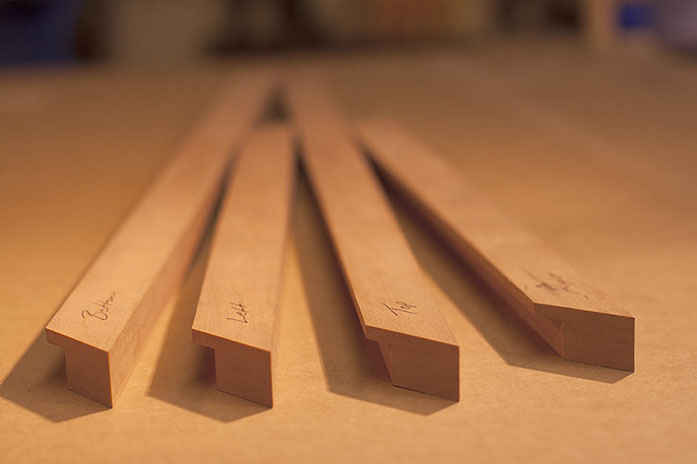


The air-dried hardwoods are selected for their grain patterns and suitability for framing.
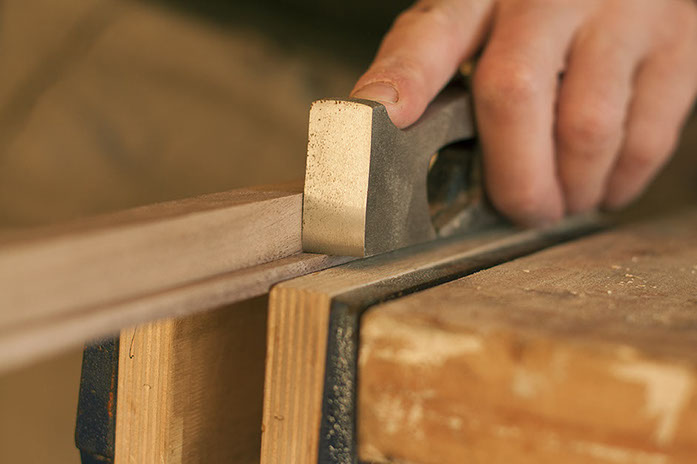
The selected board is planed and marked out to ensure grain runs around the frame evenly.
The planed boards are then cut to width, the framing rebate cut out.
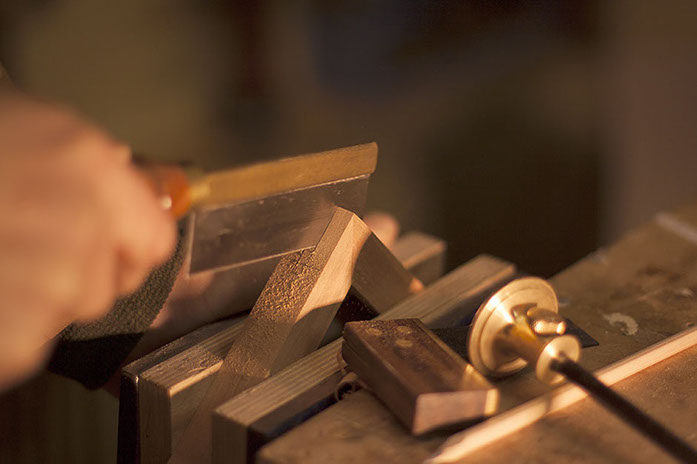
The sides of the frame are cut and then precisely trimmed to ensure a perfect mitre join.
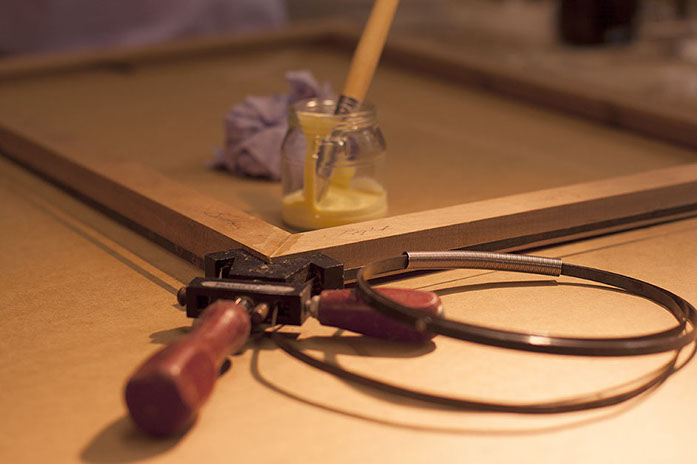
The frame is then glued, clamped and left to dry.
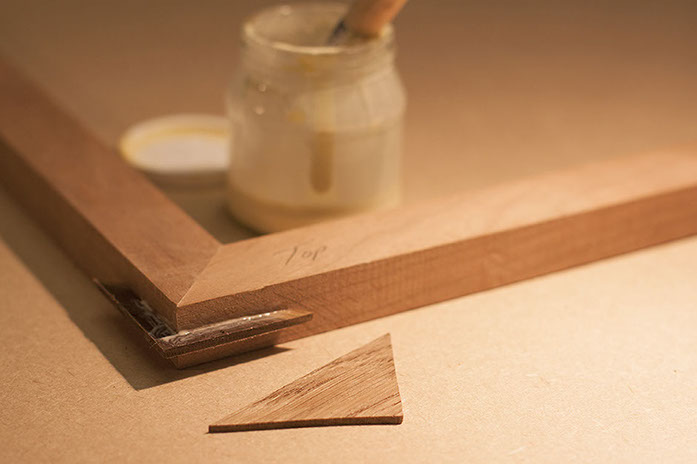
The distinctive notches are then cut in each corner.
Corner splines are cut from either matching or contrasting timber depending on what you choose.
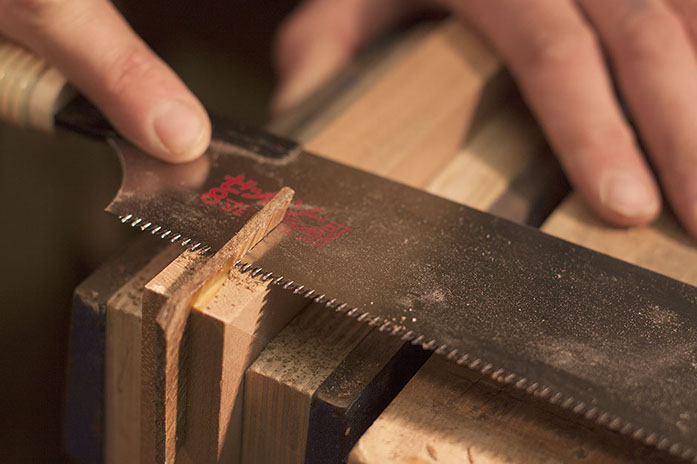
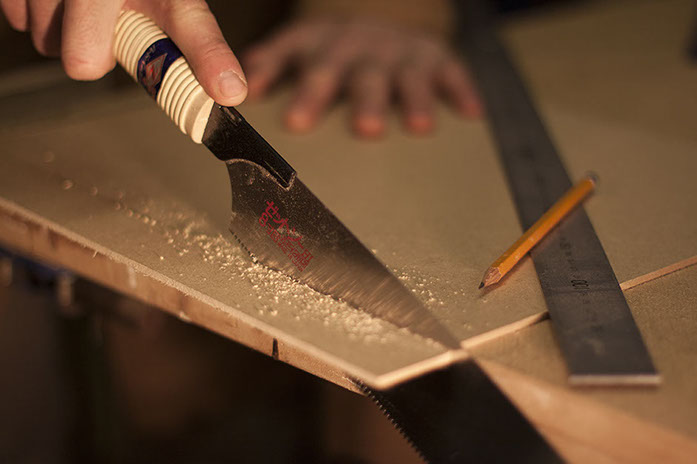
When the glue is set the tabs are then cut flush with a Japanese hand saw.
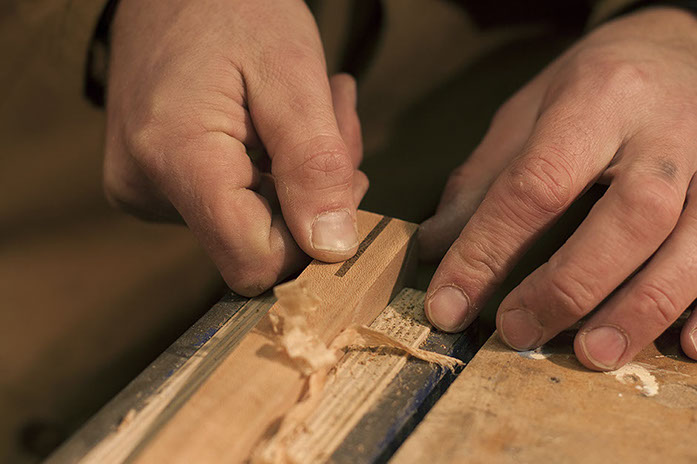
The frame corners are then hand-planed flat.
The corner is now extremely strong as well as aesthetically pleasing.
The whole frame is now hand sanded in stages and finished with 1000 grit paper.
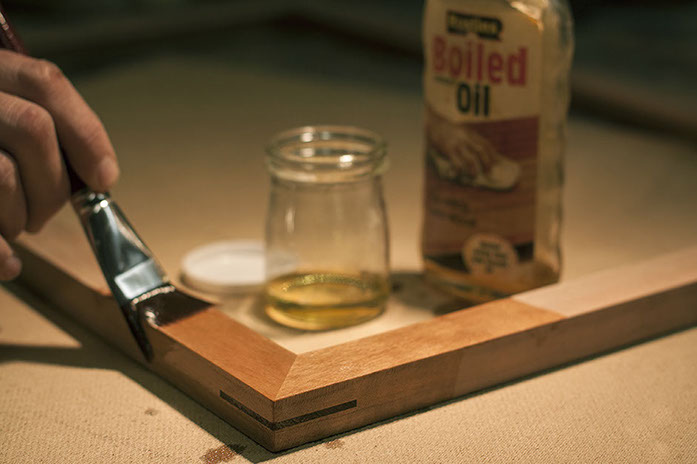
Boiled Linseed oil is applied to the bare frame, rested, then rubbed down with a clean cloth.
The solid backing board is cut to a snug fit. Then it's off to the framing studio.
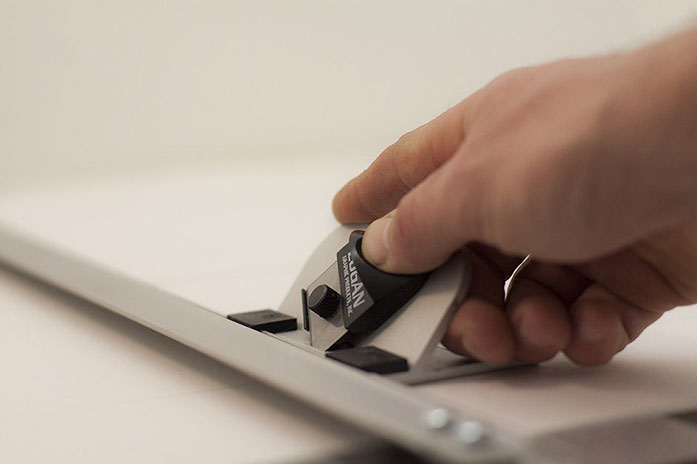
The archival-quality matt board is cut to size and the window mounts are carefully cut.
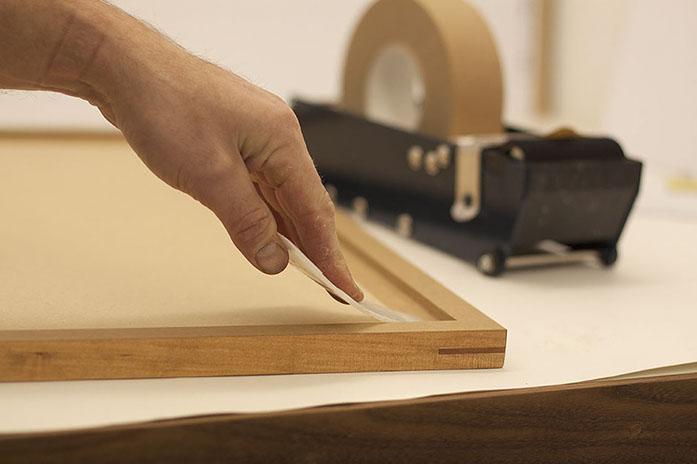
The frame is sealed in using traditional gum paper this technique lasts the test of time.
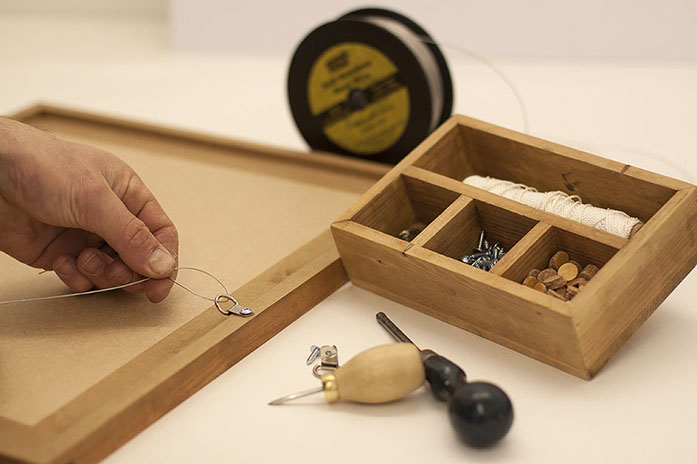
High-strength framing wire is attached to chrome d-rings with matching chrome screws.
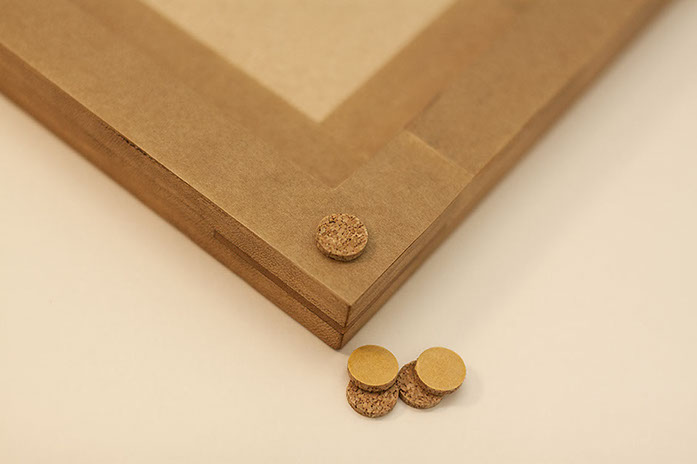
Corner bumpers ensure your walls are protected and air can get to the back of the frame.
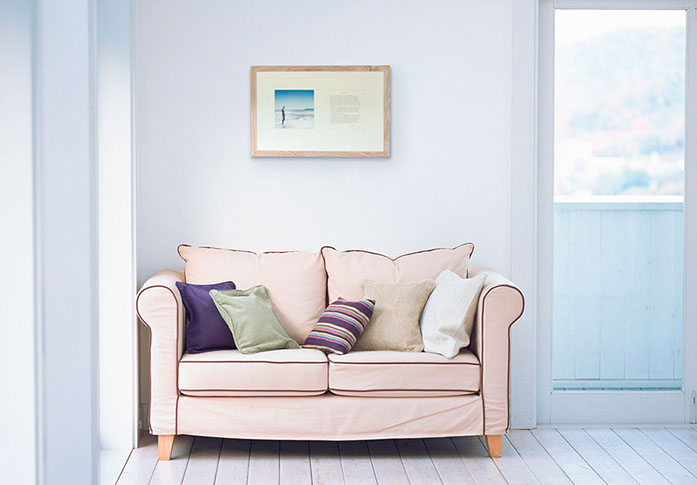
A Perfection Framing frame in situ, it's natural appeal adding to the beauty of your home.
<
>
